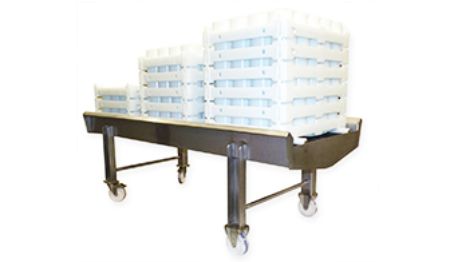


Fromagex Products
From cultures to packaging, including equipment, here is our range of products.

HOLDBAC YM-C Freeze-dried 100 DCU
Concentrated, freeze-dried culture for direct inoculation of process milk.
Defined multiple-species culture.
The quantities of inoculation indicated should be considered as guidelines.
Supplement cultures may be required depending on technology, fat content and product properties desired.
We do not accept any liability in case of undue application.
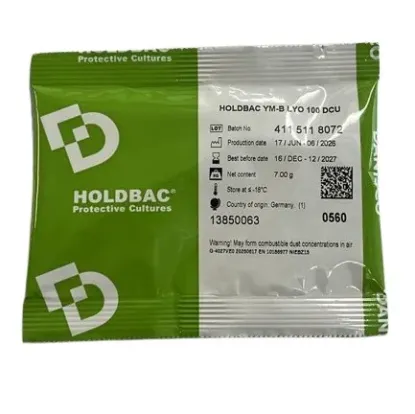
HOLDBAC YM-B Freeze-dried 100 DCU
Protective culture with slow to very slow acidification, producing L(+) type lactic acid, acetic acid and propionic acid. In addition, small amounts of other types of acids, such as diacetyl, are formed.
HOLDBAC® YM-B LYO 100 DCU is added to acidifying cultures and may improve the texture and/or taste of fermented products.
HOLDBAC® YM-B LYO 100 DCU has been shown to help maintain product freshness throughout its shelf life and protect against the development of undesirable flavors during storage and transportation.
As demonstrated, HOLDBAC® YM-B LYO 100 DCU biologically inhibits the growth of undesirable microorganisms, such as yeasts and molds and heterofermentative lactobacilli. Efficacy depends on the strains and species and is influenced by the extent of contamination.

HOLDBAC YM VEGE Freeze-dried 100 DCU
Protective culture with very slow and low acidification forming lactic acid of the L(+) type, acetic acid and propionic acid. Furthermore, small amounts of other acids as well as diacetyle are formed.
As can be proved, HOLDBAC® YM VEGE LYO 100 DCU inhibits undesired microorganisms, e. g. yeasts and moulds through competitive exclusion exerted following a fermentation stage. The efficacy depends on strain and species and is influenced by the extent of the contamination.
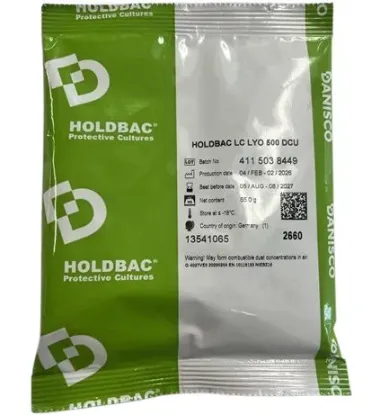
HOLDBAC LC Freeze-dried 500 DCU
Very slow acidifying homofermentative protective culture. HOLDBAC™ LC LYO 500 DCU produces L(+) lactic acid and breaks down small amounts of citrate into diacetyl and acetoin. It is highly salt-resistant.
HOLDBAC™ LC LYO 500 DCU biologically inhibits undesirable microorganisms (depending on the strains and species), such as leuconostocs, heterofermentative lactobacilli and enterococci.

HOLDBAC YM-B Plus Freeze-dried 500 DCU
Protective culture with very slow and low acidification forming lactic acid of the L(+) type, acetic acid and propionic acid. Furthermore, small amounts of other acids as well as diacetyle are formed. HOLDBAC® YM-B Plus LYO 500 DCU is added together with acidifying cultures and can improve the texture and/or flavour of fermented product. HOLDBAC® YM-B Plus LYO 500 DCU has been shown to maintain product freshness throughout shelf-life and contribute to protect against some off-flavour developement during storage and transportation.
As can be proved, HOLDBAC® YM-B Plus LYO 500 DCU inhibits undesired microorganisms in a biological way, e.g. yeasts and moulds. The efficacy depends on strain and species and is influenced by the extent of the contamination.
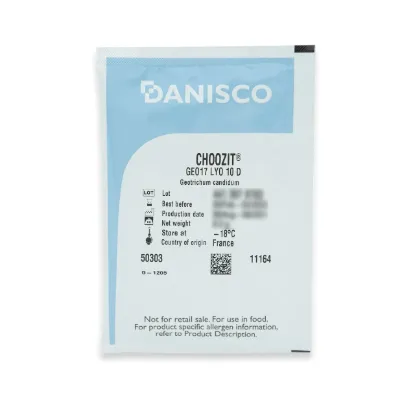
GEO 17 Freeze-dried 10 D
- GEO17 LYO 10 D is a mould-like form.
- It is better to use GEO17 LYO 10 D in association with Penicillium Candidum.
- Trend to reduce the thickness of cheese rind is to increase the dosage of GEO17 LYO 10 D to the detriment of Penicillium Candidum dosage.
- Rapid de-acidification of curd by metabolism of lactic acid due to rapid growth (24-48 hours) of a selected, easily controlled surface flora.
- Enzymatic activity is weak compared to Penicillium candidum, but aroma and flavour development is excellent.
- Enhances the final appearance of the cheese: less dense 'felt' of the Penicillium surface flora, reduced proteolysis (less ammonia) and contaminant control.
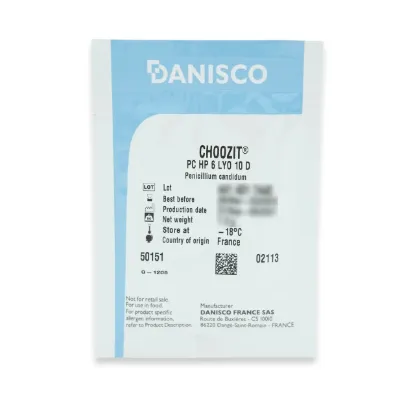
HP 6 Freeze-dried 10 D
- Medium height and density.
- Rapid growth.
- Proteolysis strong enough to allow a development on strong substrates.
- Intermediate lipolysis.
- PC HP 6 LYO 10 D provides a whiteness appearance and stability beneath the wrapper, speed of moulds growth and ageing stability.
- PC HP 6 LYO 10 D gives enzymatic activity, aroma development and inhibition of contaminants.
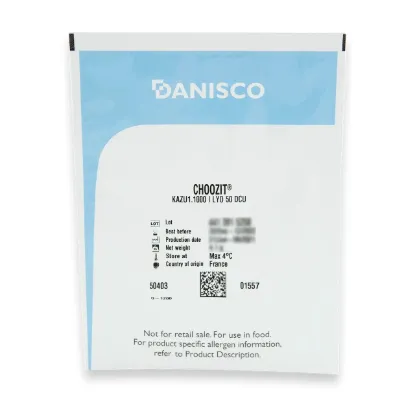
KAZU 1 - 1000L Freeze-dried 50dcu

KEFIR DC for 1000L Freeze-dried
Application:
- kefir of mild taste and high viscosity.
- kefir drink of mild taste and high viscosity.
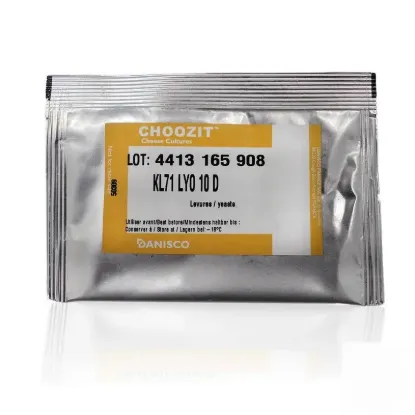
KL71 Freeze-dried 10 D
- Development potential of KL 71 LYO 10 D in the cheese maturation environment.
- Rapid neutralisation capability, aroma development, and enzymatic activity.
- KL 71 LYO 10 D is compatible with other desirable flora during cheese making.
- Carbohydrate metabolism: assimilation of sugar (strict aerobic).
- Protein metabolism: caseolytic and aminopeptidasic activity, yielding peptides and amino-acids.
- Lipid metabolism: degradation of triglycerides.
- Kluyveromyces lactis is a synonym of Kluyveromyces marxianus var. lactis.
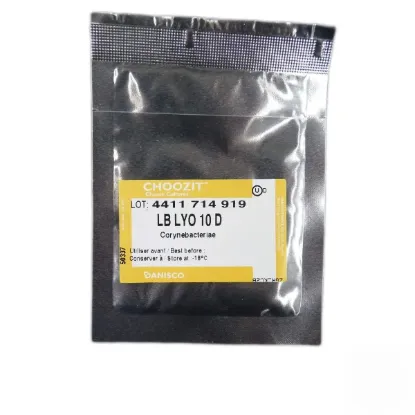
LB Freeze-dried 10 D
- Formation of a natural, ivory to orange coloured surface flora.
- Development of characteristic aromas and flavours.
- When LB LYO 10 D is inoculated into milk before renneting, it allows to achieve some degree of pre-ripening.
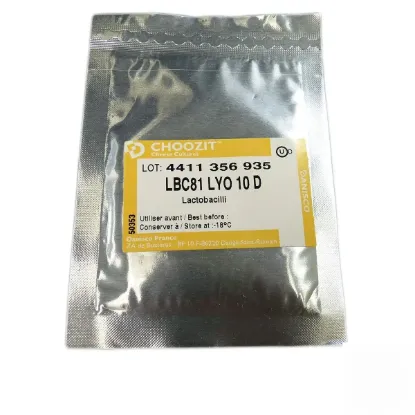
LBC 81 Freeze-dried 10 D
- Lactobacillus paracasei subsp. paracasei is commonly named Lactobacillus casei.
- Thanks to aminopeptidase activity, LBC 81 LYO 10 D is interesting in all cheese making technologies, particularly during secondary proteolysis, for hydrolysis of bitter peptides.
- LBC 81 LYO 10 D provides a microbial protection of the substrates by rapid implantation (competition effect), a shorter maturation time, a low lipolytic activity and enhanced flavour and aroma.
- Use of active strains at low temperatures (10 to 15°C) reduces maturation time while enhancing the organoleptic quality of the cheese.

LH 100 Freeze-dried 50 DCU
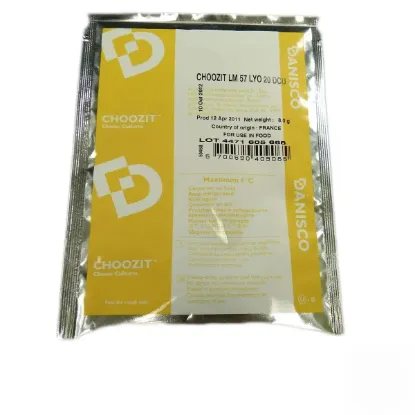
LM 57 Freeze-dried 20 DCU
- Gas producing mesophilic cultures.
- Gas production is measured on sterilised reconstituted milk (13%), standardised to pH 6.60, to which has been added 5g per litre yeast extract, incubated at 30°C for 24 hours.
- 40 ml of inoculated milk with a concentration of 2 DCU / 100 l of milk and incubated at 30°C for 24 hours give, in experimental conditions, more than 25ml of CO².

MA 11 Freeze-dried 250 DCU
Mesophilic cultures providing reliable acidification profiles.
Eliminates the need for bulk starter preparation.
A phage alternative is available on request.
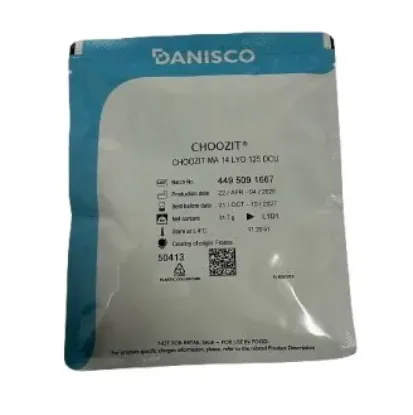
MA 14 Freeze-dried 125 DCU
Mesophilic cultures providing reliable acidification profiles.
Eliminates the need for bulk starter preparation.
A phage alternative is available on request.
MA 14 Freeze-dried 250 DCU
Mesophilic cultures providing reliable acidification profiles.
Eliminates the need for bulk starter preparation.
A phage alternative is available on request.

MA 19 Freeze-dried 250 DCU
Mesophilic cultures providing reliable acidification profiles.
Eliminates the need for bulk starter preparation.
A phage alternative is available on request.

MA 4001 Freeze-dried 25 DCU

MA 4002 Freeze-dried 25 DCU

MD 89 Freeze-dried 125 DCU
- CHOOZIT® MD 89 LYO 125 DCU is used for additional aroma development, flavouring with diacetyl production.
- Direct vat inoculation of milk and cream.
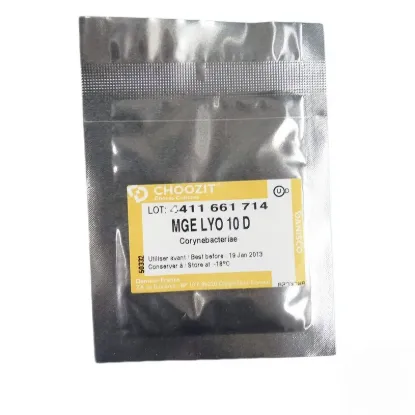
MGE Freeze-dried 10 D
- Formation of a natural, white-creamy coloured surface flora.
- Development of characteristic aromas and flavours.
- When MGE LYO 10 D is inoculated into milk before renneting, it allows to achieve some degree of pre-ripenning.
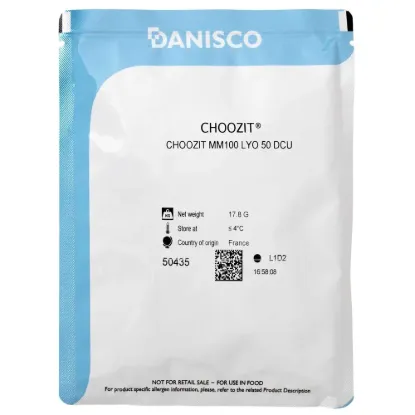
MM 100 Freeze-dried 50 DCU
Mesophilic culture providing reliable acidification profile with a nice flavour development and controlled gas production.
Eliminates the need for bulk starter preparation.
A phage alternative is available on request.

MM 100 Freeze-dried 125 DCU
Mesophilic culture providing reliable acidification profile with a nice flavour development and controlled gas production.
Eliminates the need for bulk starter preparation.
A phage alternative is available on request.
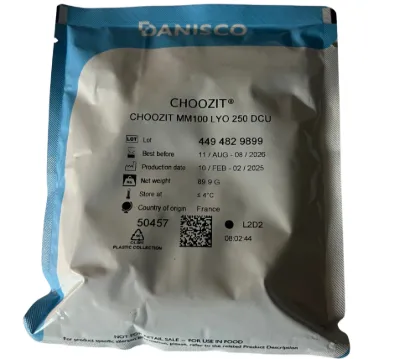
MM 100 Freeze-dried 250 DCU
Mesophilic culture providing reliable acidification profile with a nice flavour development and controlled gas production.
Eliminates the need for bulk starter preparation.
A phage alternative is available on request.