



Cultures
Choosing the right cultures for your application is the basis of your success. Here you will find the different ranges of cultures available.
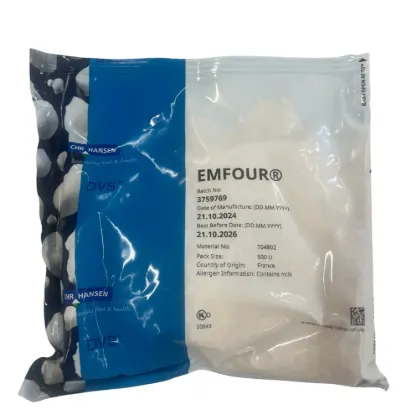
EMFOUR Frozen 500 u
Thermophilic homofermentative culture blend.
In 1984 it was selected by Dutch cheesemakers as the most effective thermophilic culture for accelerating ripening in Dutch cheeses.
The culture significantly enhances mature and nutty flavor notes, and there is a tendency towards sweet, sour and salt tastes, too.
The body of the cheese is also enhanced by the use of EMFOUR.
The culture can reduce the ripening time by several weeks depending on the type of cheese, storage temperature and desired flavor.
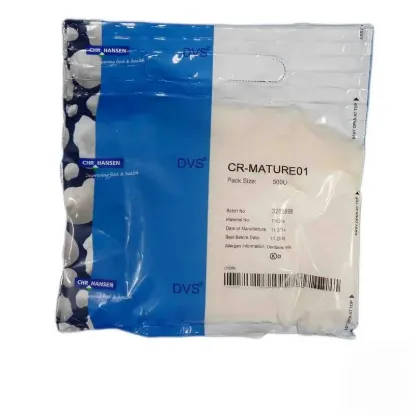
CR-MATURE 01 Frozen 500 u
A defined adjunct culture blend which enhances the overall flavor intensity of the cheese by accentuating important flavor notes.
It enhances the balanced, mellow, rounded and clean flavors and suppresses unwanted flavors like sour, bitter and flat.
The culture contains a nisin producing strain for promotion of bacteria lysis.
Some strains are facultative heterofermentative and may produce CO2 in specific conditions.
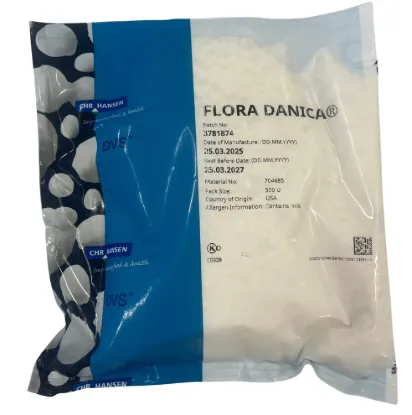
FLORA-DANICA Frozen 500 u
Mesophilic aromatic culture, type LD.
The culture produces flavor and CO2.
The culture is primarily used in the manufacture of Continental cheese types (Gouda, Edam, Leerdam, Samsoe) and soft cheese types (Lactic cheeses, Camembert, Blue cheese).
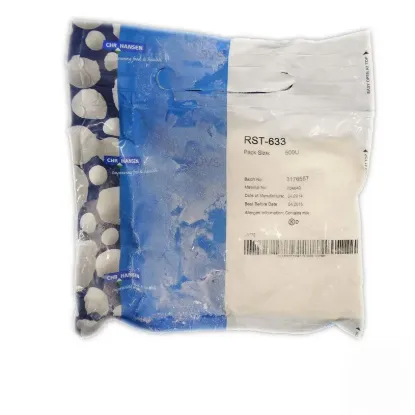
RST-633 Frozen 500 u
This Chr.Hansen DVS® culture contains defined mesophilic and thermophilic strains and is for continous direct vat set use.
The culture provides fast lactic acid production and high phage robustness without any CO2 production (homofermentative).
The culture is primarily applied in the production of semi-hard, hard and very hard pressed cheeses with a closed texture and a min cooking temperature at 35°C (95°F).
Examples of applications are Cheddar, Cheshire, Colby, Monterey Jack, Munster, Fontal, Raclette & Saint Paulin.
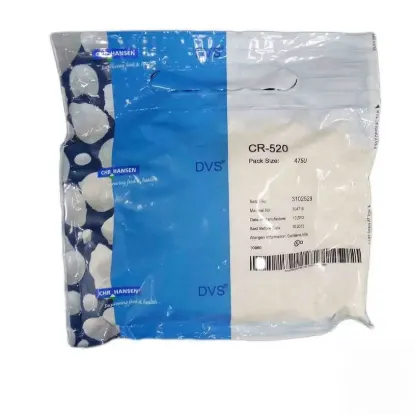
CR-520 Frozen 475 u
A defined adjunct culture blend which enhances the overall flavor intensity of the cheese by accentuating important flavor notes.
It enhances the balanced, mellow, rounded and clean flavors and suppresses unwanted flavors like sour, bitter and flat.
The culture is primarily applied in the production of cheeses where normally mesophilic lactic acid bacteria are used.
This culture is particularly used in Cheddar, Continental cheeses (rindless cheese), low-fat cheese and cheese containing vegetable fat.
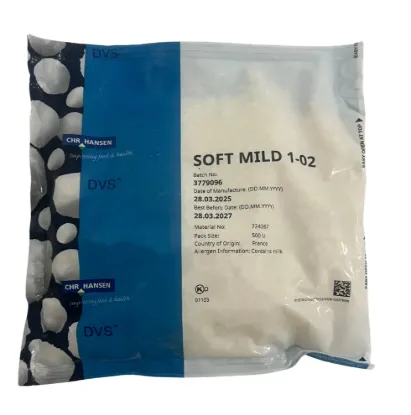
Soft Mild 1-02 Frozen 500 u
Thermophilic lactic acid cultures.
This Chr.Hansen culture system provides thermophilic defined strains for continuous Direct Vat Set (DVS®) use by rotation.
The cultures are selected for their moderate lactic acid production and low post-acidification.
The culture is primarily applied in the production of soft cheeses where low post acidification is required, e.g. stabilized soft cheeses (Brie, Crescenza, Argentinean Port Salut) and modern Camembert types.
SSC cultures can be used alone (stabilized cheeses) or in combination with Mesophilic aromatic cultures (LD types).
R-608 Frozen 500 u
This Chr.Hansen DVS® culture contains defined mesophilic strains and is for continous direct vat set use.
The culture provides fast lactic acid production and high phage robustness without any CO2 production (homofermentative).
The culture is primarily applied in the production of cheeses with a closed texture, e.g. Cheddar, Feta and Cottage cheese.
The culture can be applied in other fermented dairy products, in combination or not with other lactic cultures.
CHN-22 Frozen 500 u
Mesophilic aromatic culture, type LD.
The culture produces flavor and CO2.
The culture can be used in the manufacture of the following products
- soft cheese with slow acidification (Lactic cheese, Camenbert, Blue Cheese)
- cheese varieties with eyes (Gouda, Edam)
- fermented milk products manufactured by separation method (Sour Cream, Fromage Frais)
- lactic butter.
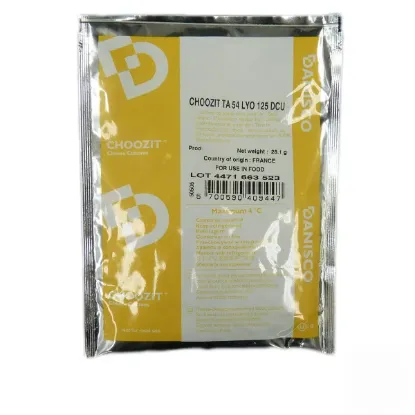
TA 54 Freeze-dried 125 DCU
Freeze-dried concentrated lactic starter for the direct vat inoculation of milk and milk bases.
Thermophilic culture with moderate acidification speed, suitable for stabilized soft cheese technologies and adapted for the long maturation process and high demolding pH (> 5.10).
A phage alternative is available on request.

STI-14 Freeze-dried 50 u

BL-1 Swing Freeze-dried 10 u
A selected single strain culture with origins in traditional cheese making.
Brevibacterium is one of the most important surface bacteria for its role in coloring the surface of the cheese, and producing flavor.
The culture may be applied in the production of smeared soft and semi-hard cheeses, mold soft cheese, or mixed rind cheeses.
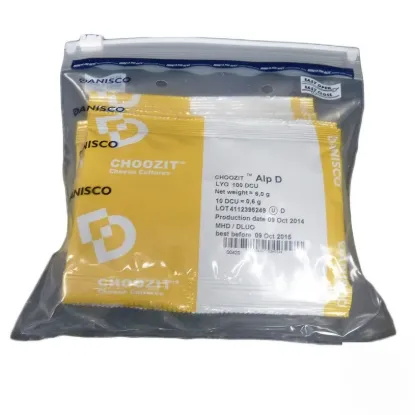
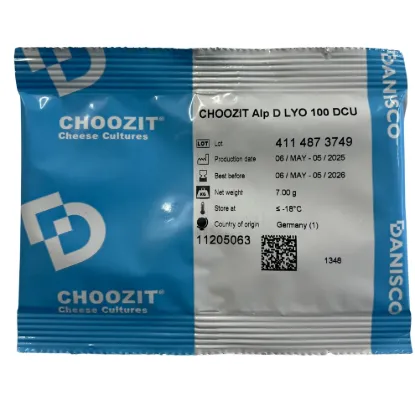
ALP D Freeze-dried 100 DCU
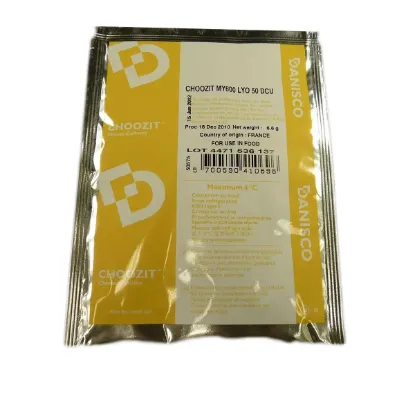
MY 800 Freeze-dried 50 DCU
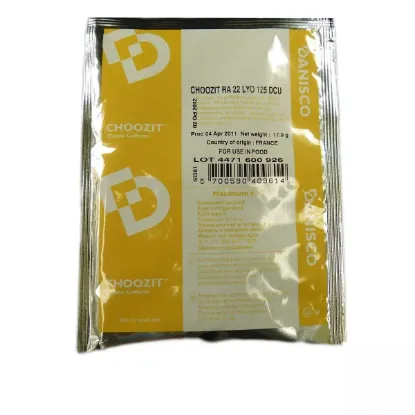
RA 22 Freeze-dried 125 DCU
- Mesophilic/thermophilic culture providing good robustness to bacteriophages and rapid acidification over a wide temperature range.
- Provides a reliable acidification profile and enhanced flavor.
- Eliminates the need for bulk starter preparation.
- A phage alternative is available on request.
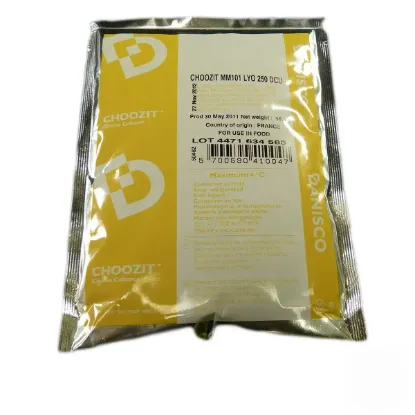
MM 101 Freeze-dried 250 DCU
Mesophilic culture providing reliable acidification profile with a nice flavour development and controlled gas production.
Eliminates the need for bulk starter preparation.
A phage alternative is available on request.

LAF-TRIO Swing Freeze-dried 10 u
Selected yeast strains with origin in traditional French cheese making.
SWING® LAF TRIO is a blend of defined yeast strains.
They have been especially selected for their ablity to prevents the growth of contaminant at the surface of the cheese.
The synergetic effect from the strains inhibits contaminant, e.g. blue molds and mucor.

LH-B02 Freeze-dried 50 u
Defined thermophilic lactic acid culture.
The culture enhances the overall flavor intensity of the cheese by accentuating important flavor notes.
The culture is primary applied in the production of Italian and Swiss cheese varieties.
The culture can be applied alone or in combination with other lactic cultures, e.g. Streptococcus thermophilus and Lactobacillus delbrueckii subsp.bulgaricus and LD culture.
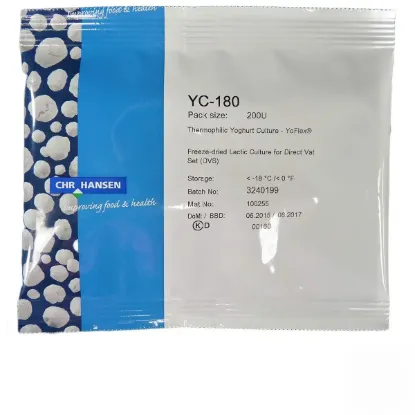
YC-180 Freeze-dried 200 u

LAF 7 Swing Freeze-dried 10 u
Selected yeast single strain with origin in traditional French cheese making.
SWING® LAF cultures are an important tool in cheese making since they may be used to affect curd neutralization, texture and flavor.
Yeasts are common in traditional raw milk cheeses but arerarely found in industrially produced cheeses.
Therefore adding selected and controlled yeast cultures to the cheese may improve quality.
The yeast culture may be used to provide a balanced flavor and medium to high levels of CO2 formation in Kefir type products.
The culture will provide flavor and medium to high CO2 formation.
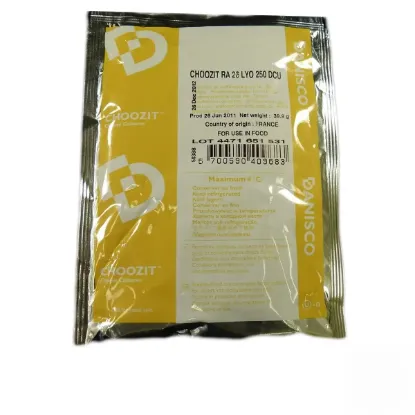
RA 26 Freeze-dried 250 DCU
- Mesophilic/thermophilic culture providing good robustness to bacteriophages and rapid acidification over a wide temperature range.
- Provides a reliable acidification profile.
- Eliminates the need for bulk starter preparation.
- A phage alternative is available on request.
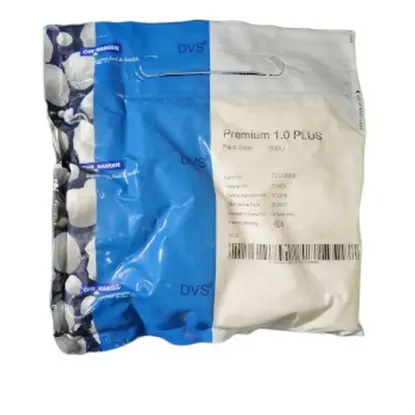
PREMIUM 1.0 PLUS Frozen 500 u
Thermophilic YoFlex® culture.
The culture will produce yoghurt with mild flavor, extra high viscosity and low post-acidification.
Suitable for stirred and set yoghurt.
The culture is ideal for manufacturing of Greek yogurt.
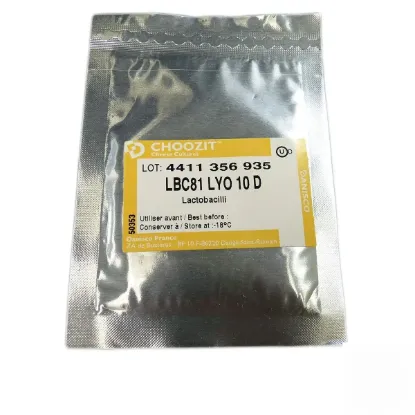
LBC 81 Freeze-dried 10 D
- Lactobacillus paracasei subsp. paracasei is commonly named Lactobacillus casei.
- Thanks to aminopeptidase activity, LBC 81 LYO 10 D is interesting in all cheese making technologies, particularly during secondary proteolysis, for hydrolysis of bitter peptides.
- LBC 81 LYO 10 D provides a microbial protection of the substrates by rapid implantation (competition effect), a shorter maturation time, a low lipolytic activity and enhanced flavour and aroma.
- Use of active strains at low temperatures (10 to 15°C) reduces maturation time while enhancing the organoleptic quality of the cheese.
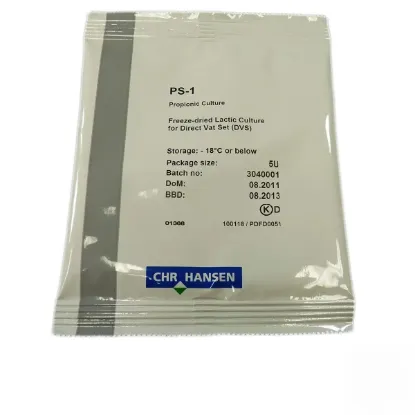
PS-1 Freeze-dried 5 u
Selected propionic acid bacteria culture.
The culture is primarily used for the production of Swiss-type cheeses, such as Emmental, Gruyère, Greve and similar types where the typical propionic acid aroma and eye formation are desired.
The culture is normally applied in combination with lactic cultures, such as Streptococcus thermophilus , Lactobacillus helveticus, Lactobacillus delbrueckii subsp.bulgaricus and LD cultures.
The culture ferments lactate resulting in the formation of propionic and acetic acids and large amounts of carbon dioxide.
Propionic acid cultures grow slowly in milk and have a low proteolytic activity.
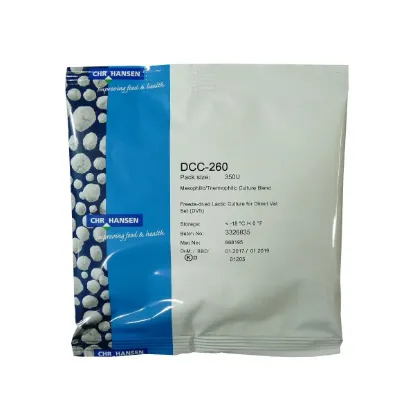
DCC-260 Freeze-dried 350 u
Aromatic culture blend.
The DCC culture range provides cultures with very fast acidification properties at a low inoculation rate.
The culture produces flavor and CO2.
The culture is primarily used in the manufacturing of Dutch and Continental semi-hard cheese varieties with eyes, e.g. Gouda and Edam.
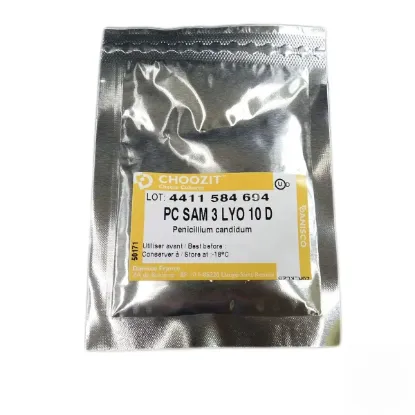
SAM 3 Freeze-dried 10 D
- Anti-mucor strain.
- Medium height and density.
- Very rapid growth.
- Proteolysis and lipolysis adapted to this rapid growth.
- PC SAM3 LYO 10 D can be used with all types of substrates, even highly mineralized ones. It is particularly adapted to inhibit mucor contamination.
- PC SAM3 LYO 10 D provides a white appearance and stability beneath the wrapper, rapid mould growth and ageing stability, enzymatic activity, aroma development and inhibition of contaminants.